

Beijing is an exciting city! Stay updated with our weekend summary of the latest happenings.
Beijing Pharmacy Introduces Robot Worker
A pharmacy located in Haidian District has unveiled the city's first pharmacy robot. Equipped with a metal grasping tool on one arm and a suction-like device on the other, the humanoid Galbot robot can be seen in online videos navigating medication shelves, selecting products for customer requests, and placing them into a dedicated dispensing unit for packaging and pickup by customers.
The Galbot was created by Beijing Galaxy General Robot Company (GALBOT), which was established in 2023 and specializes in the development of embodied intelligence robots. Their products have been used across various sectors including industrial manufacturing, smart retail, and healthcare.
Supporters of integrating such robots into pharmacies and other fields emphasize their ability to work around the clock without fatigue, in contrast to human workers whose productivity typically declines as their shifts progress. Furthermore, these robots can achieve productivity rates that are two to three times higher than those of humans, due to their speed and accuracy.
For humans, this translates to both advantages and disadvantages. Shop owners and customers gain from enhanced efficiency and quicker, more streamlined services, whereas human pharmacy workers may soon find themselves displaced from their positions.
New Regulations for Identifying Tired Drivers
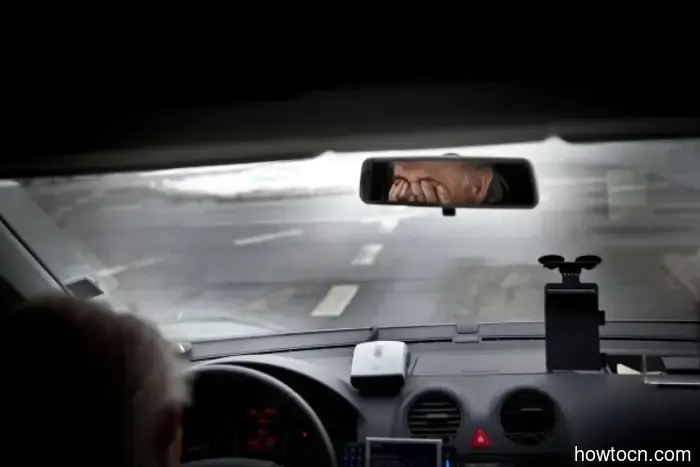
In February, the Ministry of Public Security released the "Rules for the Identification of Fatigued Driving of Motor Vehicle Drivers." These rules, set to take effect on June 1, significantly broaden the investigation and evidence collection procedures to determine if a driver has been operating a vehicle while fatigued.
Previously, authorities relied solely on driving duration to assess fatigue. Under the earlier guidelines, fatigue driving was deemed to occur if a motorist drove for over four hours without a break, or took a break shorter than 20 minutes. The new rules introduce a comprehensive three-part approach, prompting police to consider driving behavior, the driver's mental state at the time, and the driver's overall lifestyle to ascertain fatigue driving.
Moreover, the revised regulations include the term "passenger motor vehicle drivers," which encompasses those involved in passenger transport services. As such, ride-hailing drivers, taxi drivers, bus drivers, and others within these service categories now fall under the updated rules for assessing fatigue driving.
Drivers may be flagged for fatigue driving under several conditions:
Driving Behavior
- If a driver operates a vehicle for more than four consecutive hours without a break or takes a break shorter than 20 minutes.
- For passenger vehicle drivers, if they drive continuously for over two hours without rest between 10 PM and 6 AM, or if the rest period is under 20 minutes.
- If a passenger vehicle driver accumulates more than eight hours of driving within a 24-hour period.
Psychological State
- If the driver’s eyes are fully closed for two seconds or more in the ten minutes leading up to a traffic incident, or if the brainwave fatigue signature is below 30.
- If, after an accident, traffic police ascertain through questioning that the driver had difficulties concentrating, felt mentally dizzy, or was drowsy.
Lifestyle Examination
Traffic police will investigate drivers’ sleep habits and gather details on their work, diet, medications, and living situations before their driving. They will confirm if any concerning conditions exist in these areas.
Investigation Methods
Police can determine driving times, breaks, and total driving hours by accessing driving records from onboard systems or monitoring platforms, interviewing the driver and witnesses, and examining available video evidence. Investigators will also assess risk-avoidance behaviors through site analyses, simulation tests, and calculations from gathered data.
For drivers using physiological monitoring devices, data collected during the drive (such as from video surveillance and EEG monitors) can be analyzed by police. By reviewing footage and records from onboard systems or monitoring platforms, it can be determined if a driver was excessively fatigued while operating a vehicle.
Drivers may also answer specific questions related to their mental and physical state during an incident. This information might be evaluated in forensic analyses to ascertain if fatigue driving occurred.
Lifestyle Investigation Methods
Traffic police will conduct thorough investigations covering different aspects of an incident, generally spanning 24 hours prior to an accident, or 48 hours if necessary.
Sleep Analysis
Officers may ask the driver, passengers, cohabitants, or acquaintances to provide mobile phone usage data during the investigated timeframe to assess the driver's routines and sleep duration leading up to the incident.
Job Analysis
Police may assess the driver’s work conditions by interviewing the driver, colleagues, or housemates, in addition to reviewing work records, videos, or other relevant information from the period in question.
Dietary Analysis
Police may inquire about the driver's dietary habits from the driver, peers, or acquaintances and gather video evidence from places the driver ate during the relevant timeframe.
Medication Analysis
Police may investigate the driver's medication use by speaking with the driver, companions, or others and acquiring medical records, hospital admissions, and other relevant


07/21/2025 - 07/21/2025 View Asia 2025 on zzlangerhans's travel map.

Beijing is an exciting city! Stay updated with our weekend summary of the most recent news.
Beijing is a vibrant city! Stay updated with our weekend summary of the most recent news.