
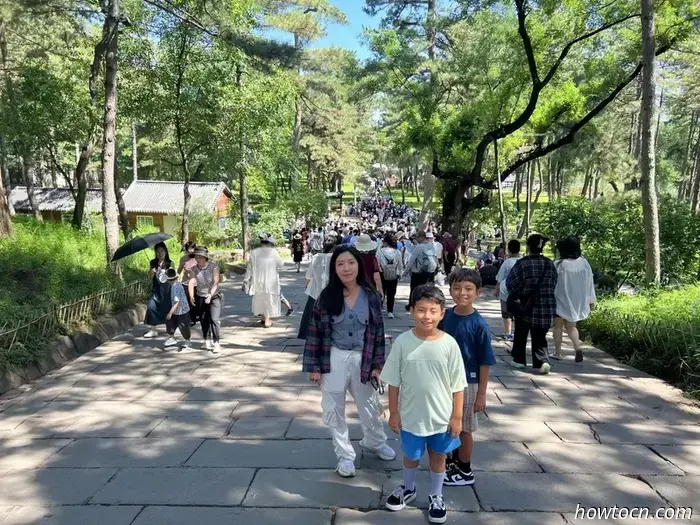
Chengde Mountain Resort may initially sound like a destination for a breakfast buffet and an acupressure massage, but it actually refers to the summer retreat of the Qing emperors. Constructed in the eighteenth century, it encompasses a park that is as expansive as the city itself. This complex of palaces and gardens is the primary draw for visitors to Chengde, a largely overlooked city of about a million people in northern Hebei province. Entrance required a ticket, and the only entry point was through the Lizheng Gate located on the southern side of the park. By ten in the morning, there were already large crowds outside, but we managed to enter without too much trouble.
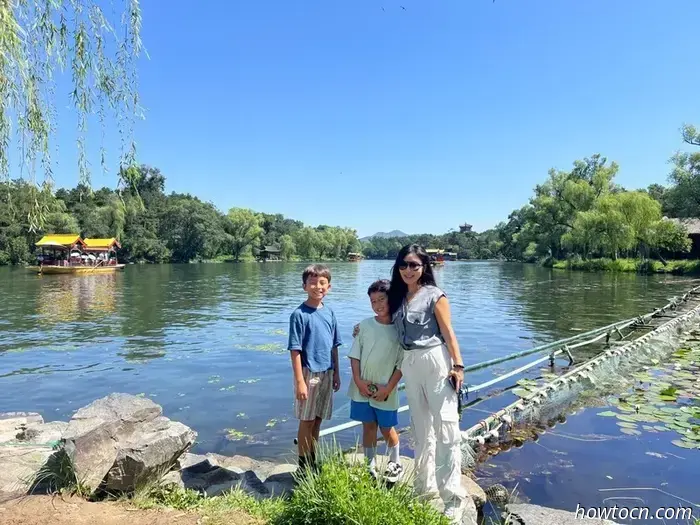
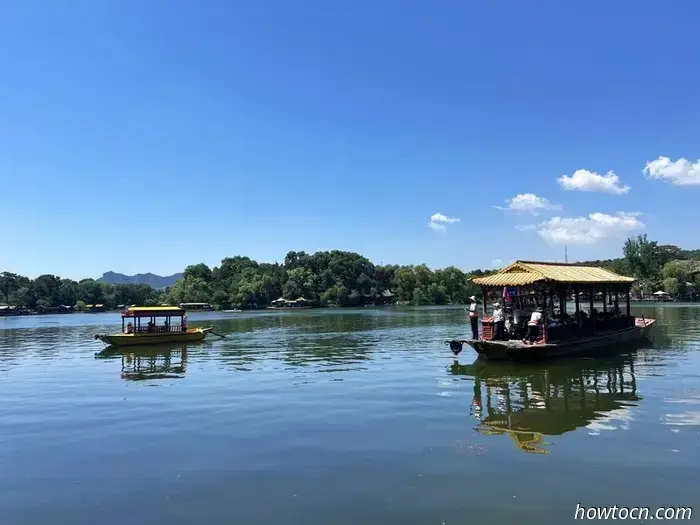
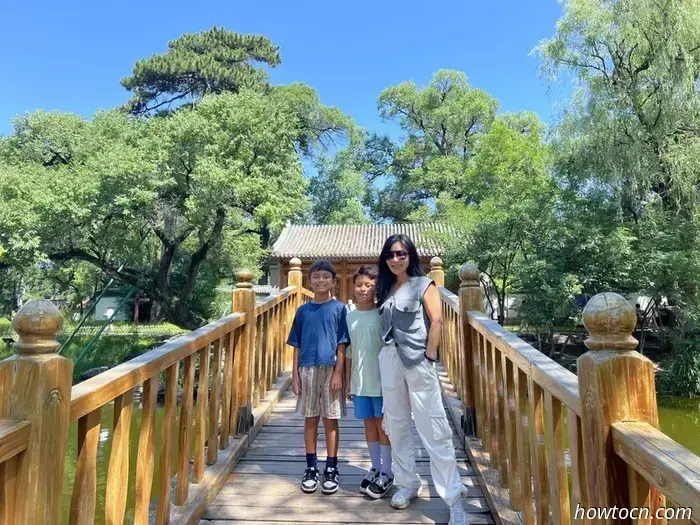
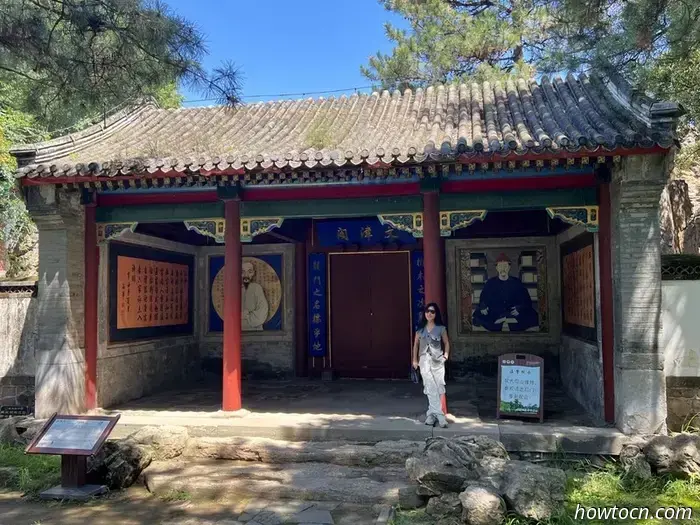
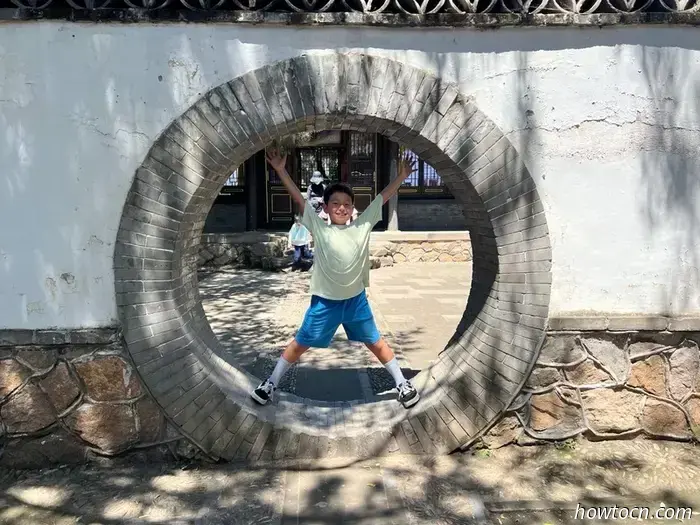
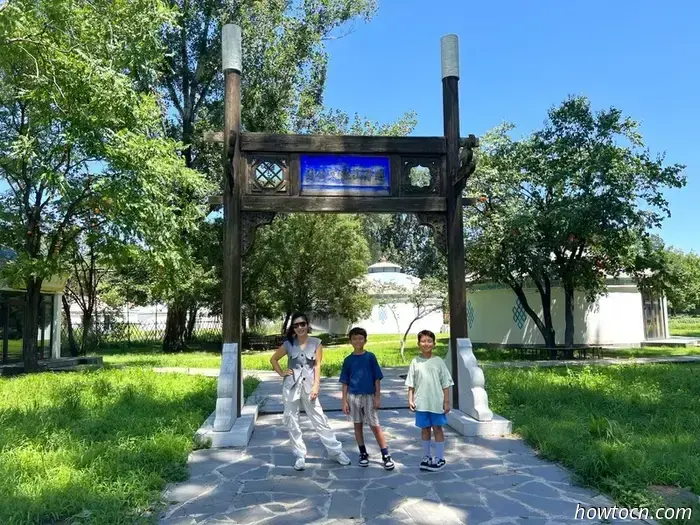
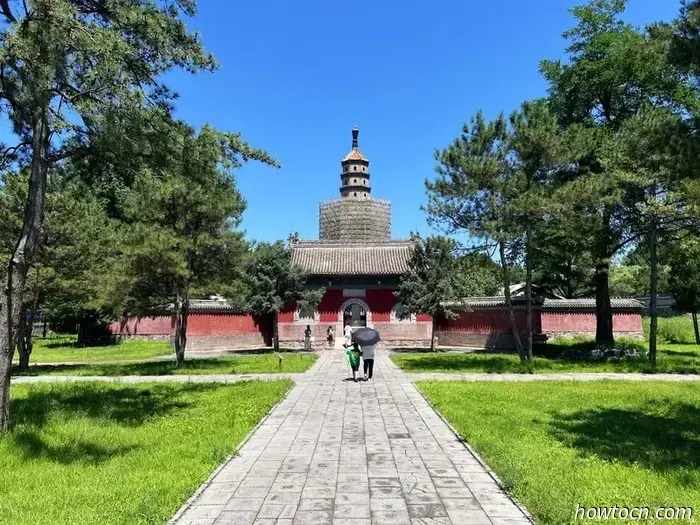
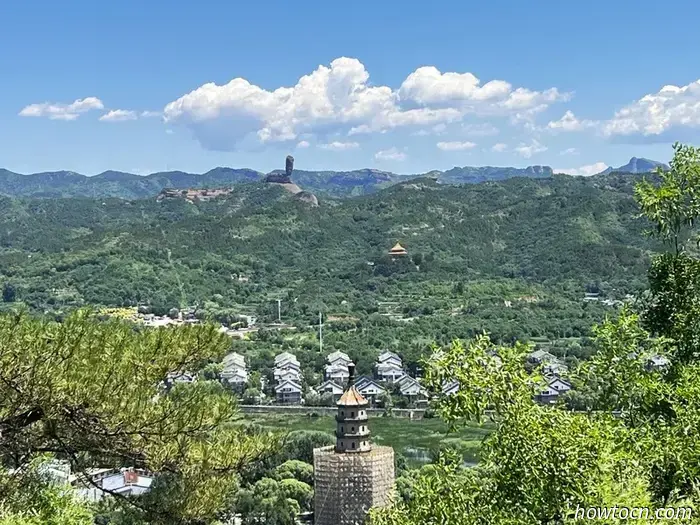
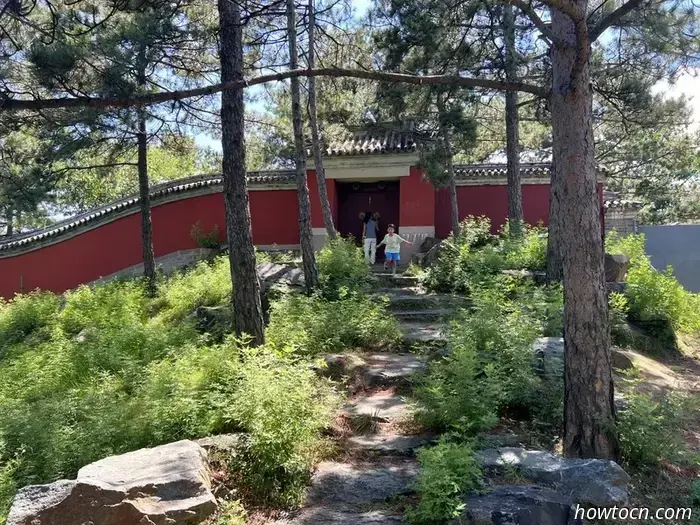
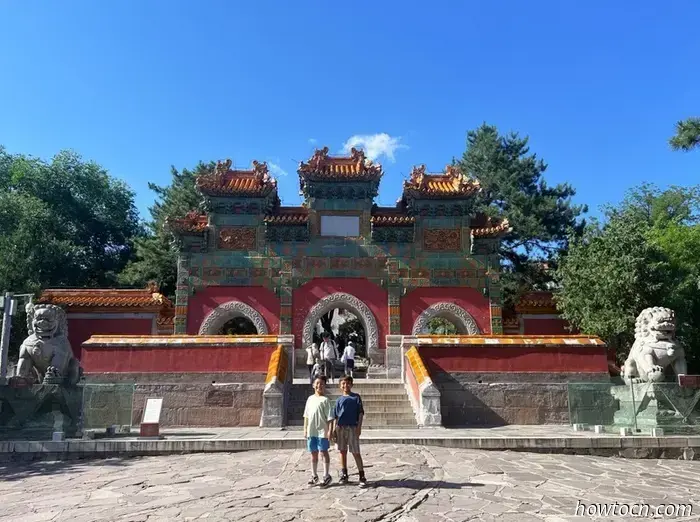
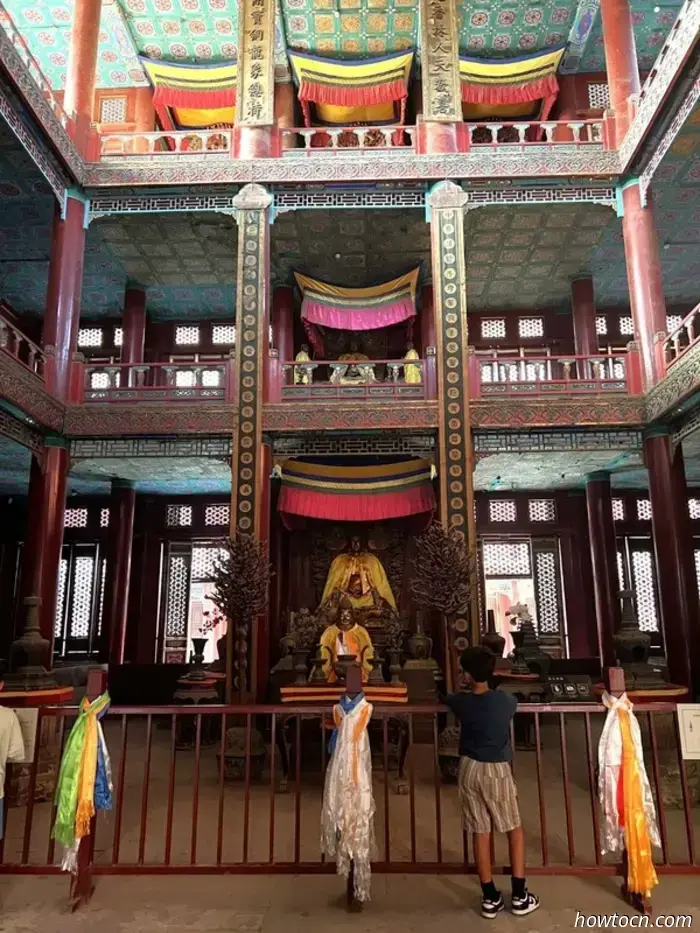
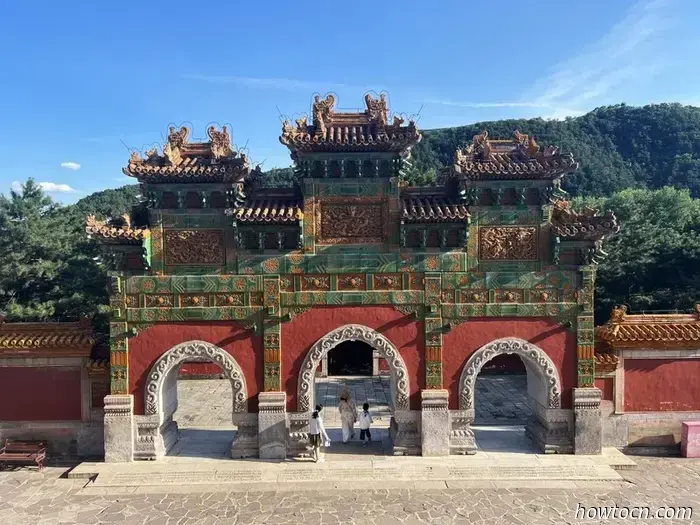
The first area we came across was an artificial lake, segmented by land bridges and islands. Scattered across the islands and along the lake's borders were several imperial-style buildings. While tour boats of various sizes ferried visitors across the lake, we chose to walk as the distances were manageable. We didn't enter many buildings since we had just come from Beijing, which was rich in Qing dynasty artifacts. However, we did meander through a couple of notable structures, including a small shrine and a wall featuring a traditional imperial moon gate. In the northeast corner of the park, we found a group of Mongolian-style yurts that had been built when the resort was constructed and have since been renovated for short-term stays. Further north stood a Buddhist temple named Yongyousi, with its ten-story pagoda visible from much of the park. Unfortunately, scaffolding obscured most of the pagoda during our visit.
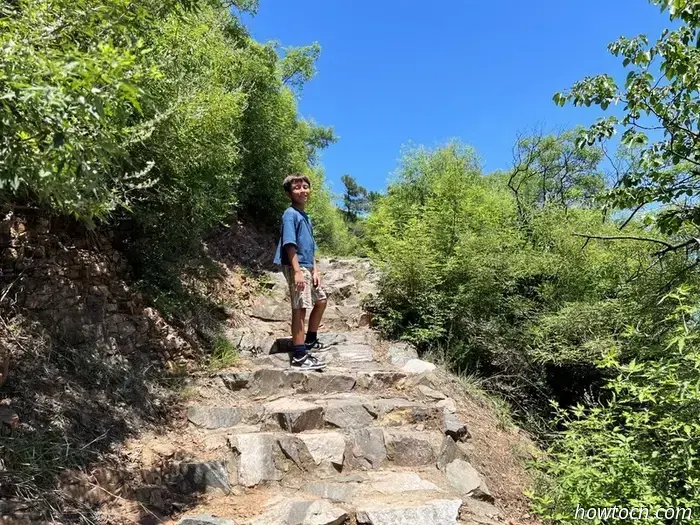
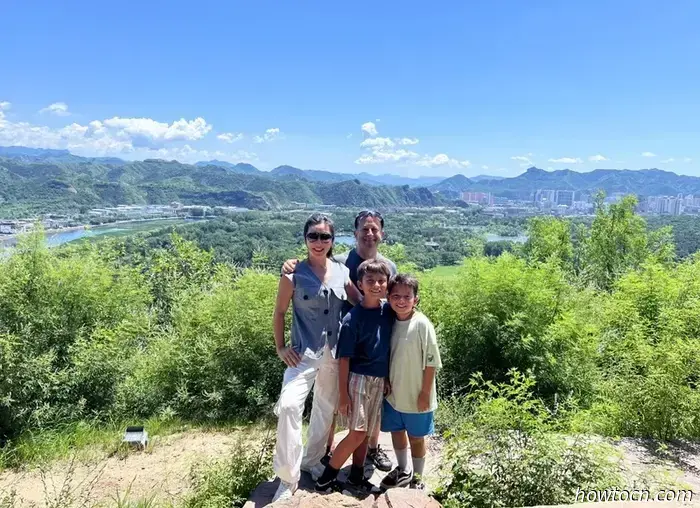
We retraced our steps toward the park's center, drawn to a pavilion atop a steep hill. Initially, we hadn’t noticed any way up, but upon closer inspection, we discovered a partially concealed stone staircase. My quadriceps were still recovering from the previous day's hike at Hongluo Temple, but my curiosity about the view compelled me to tackle the stairs. As it turned out, the ascent was more daunting than anticipated, with far more steps than the hill's height suggested. I was surprised to find so many people at the summit's pavilion, especially since we hadn't encountered anyone else climbing up or down.
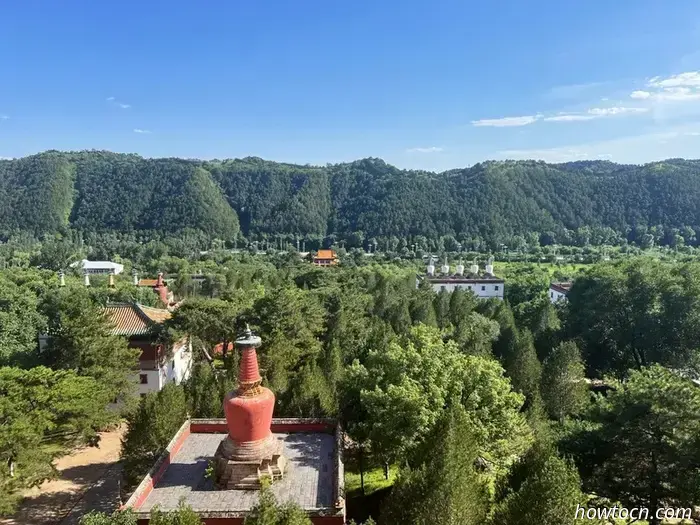
To the east, we had a view over the artificial lake and the Wulie River, which marked the eastern boundary of the park. Beyond the Yongyousi pagoda, we spotted a range of hills, one topped with a uniquely shaped rock formation resembling an anvil. I used Google Maps to identify it as Qingchuifeng and noted it for later.
On the opposite side of the hill, it was just a short descent to a tourist area with a bus stop and food stalls, clarifying the crowd at the pavilion. The bus route from the entrance curved around the hill’s western side. I noticed the road continued northwest to a site called Guangyuan Palace, about which I could find no information. This seemed a reasonable goal, so we proceeded along the roadside. The journey proved challenging, as a steady stream of buses rushed toward us on a road that offered limited space to escape. In many spots, embankments restricted any chance of stepping away from the road. At times, we managed to advance during the brief moments between bus arrivals, stepping aside as they sped past. Other visitors seemed to share our predicament, as several narrow paths through the underbrush provided shortcuts between road sections.
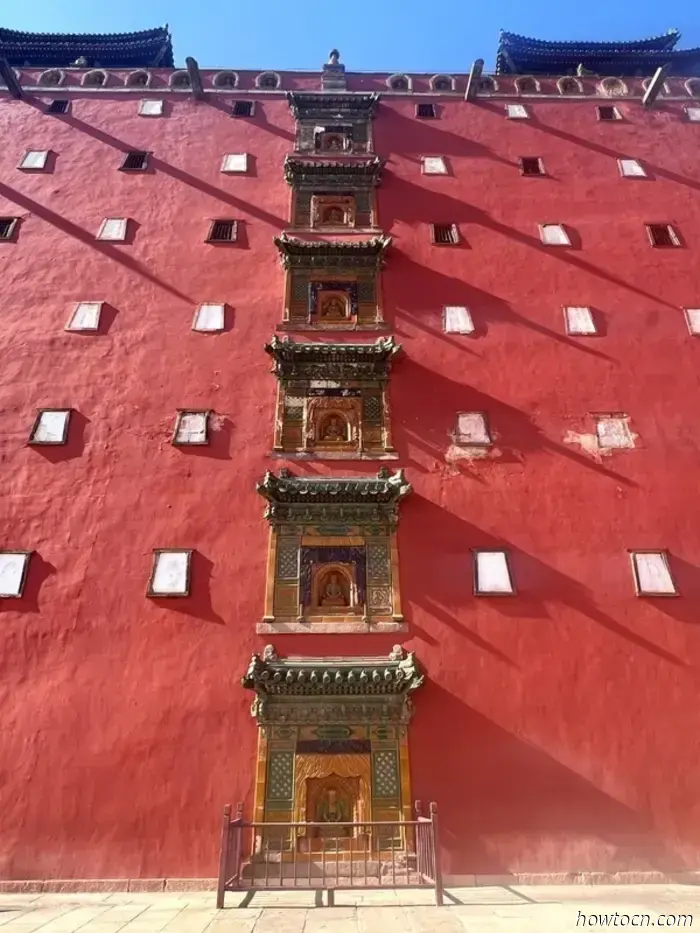
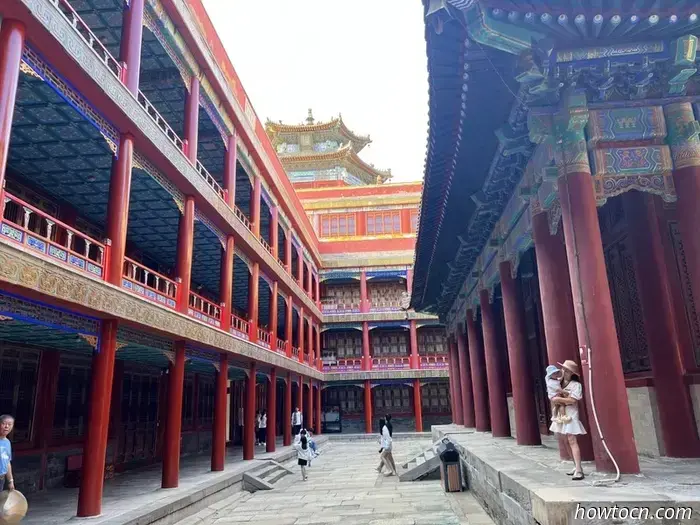
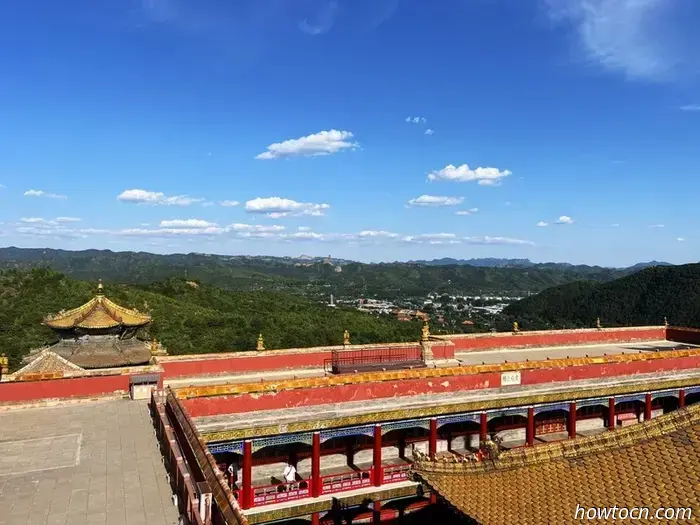
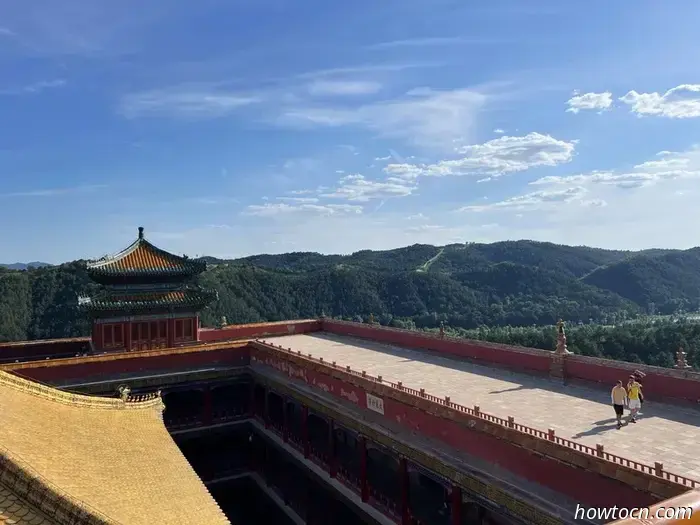
Eventually, we grew tired of dodging buses and opted for a footpath that led us away from the road, bringing us to the wall that marked the park’s northern boundary. From this vantage point, we caught our first glimpse of the Putuo Zongcheng Temple, Chengde's other significant attraction. The views were stunning, but instead of fast-moving buses, I now had to navigate an unprotected drop-off on the park side of the wall and a low battlement on the outside. I have always been apprehensive about my children being near heights, and here we had no option but to continue walking along the wall. I kept urging the boys to stay in the center of the rampart while walking ahead of me. Eventually, we climbed over a locked gate to access a section set aside for tourists that had much more secure barriers. Guangyuan Palace turned out to be just a wall and a locked door. I was uncertain why it was closed or what lay beyond it, but it felt like we had gone to all that trouble without reaping much reward.
Mei Ling asked if bus tickets could be purchased there, only to be informed they were available only at the Lizheng Gate where we had entered. We faced the choice of returning along the wall or on the road, but Mei Ling suggested we simply wait at the bus stop. We boarded the next bus that arrived without anyone asking for tickets and settled in the back, half-expecting a challenge at any moment. Fortunately, we reached the bus line's end without incident. Having



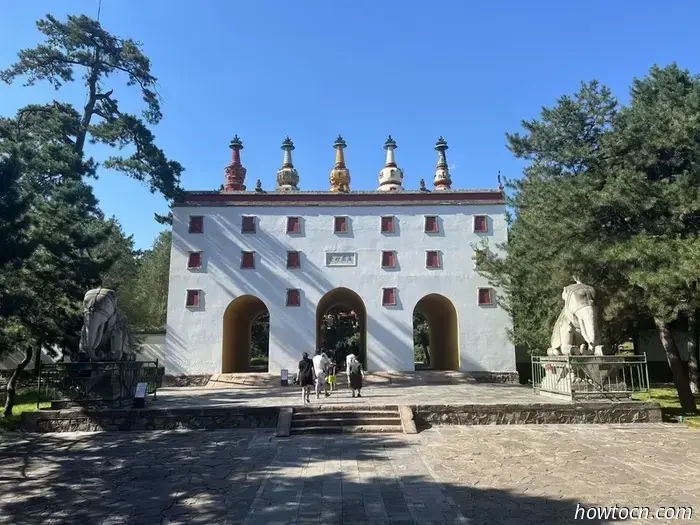




Chengde Mountain Resort may evoke images of a venue for a breakfast buffet and acupressure massage, but it is actually the literal translation of the Qing emperors' summer retreat. Constructed in the eighteenth century, it spans a park area comparable in size to the entire city. This collection of palaces and gardens is the primary attraction for visitors to Chengde, which is largely an overlooked city of around one million residents located in the northern region of Hebei province.