
The qipao (旗袍, qípáo), commonly referred to in English as the cheongsam, is a traditional Chinese garment that has evolved into a prominent symbol of Chinese femininity and sophistication. Over time, several variations of the qipao have emerged, and in this post, we will explore four distinct styles.
**Jing-Style Qipao**
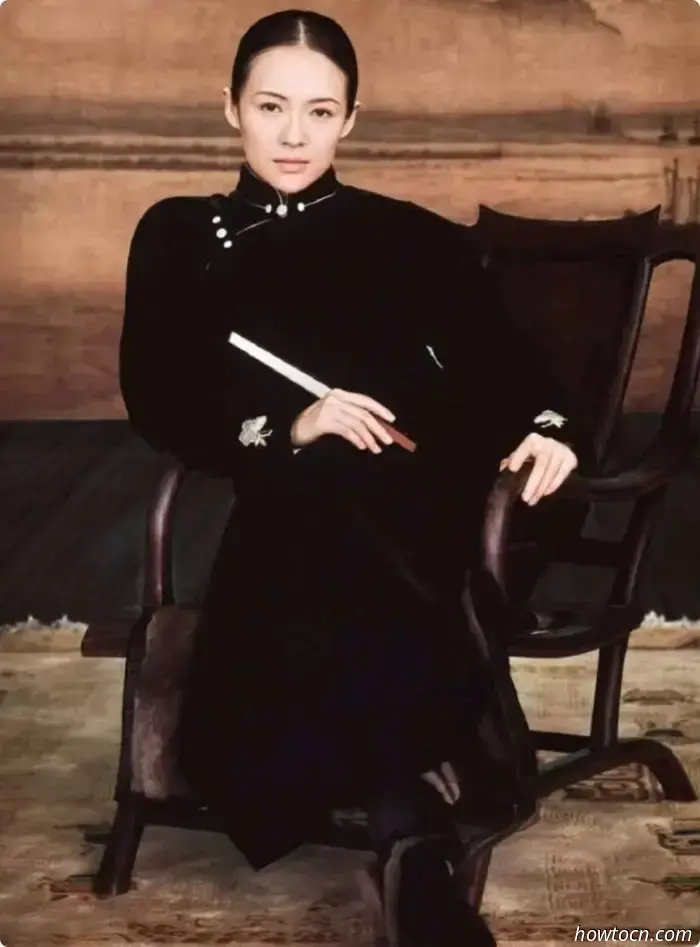
The Jing-style qipao (京派旗袍 jīng pài qípáo) has its roots in the early Qing dynasty and showcases a distinguished dressmaking tradition that thrived in Beijing. This style is noted for its luxurious fabrics such as brocade and satin, often featuring broad trims and noble lines, reflecting a sense of refined elegance. Its design illustrates the rich cultural interplay between Manchu and Han clothing; while it maintains the basic silhouette of the Qing banner dress, it has incorporated elements of Han attire.
An exceptional illustration of this style can be found in Zhang Ziyi's garments in The Grandmaster. Her qipao, made from a dark, substantial fabric, echoes the gravitas typical of Beijing court fashion. The high, straight collar, fastened with pearl-like buttons, evokes the understated elegance of the imperial period, while the wide cuffs adorned with delicate embroidery add a subtle touch of grace. The long, flowing lines of the dress, free from excessive decorations, convey authority and sophistication, embodying the aristocratic essence that characterizes the Jing-style qipao.
**Hai-Style Qipao**
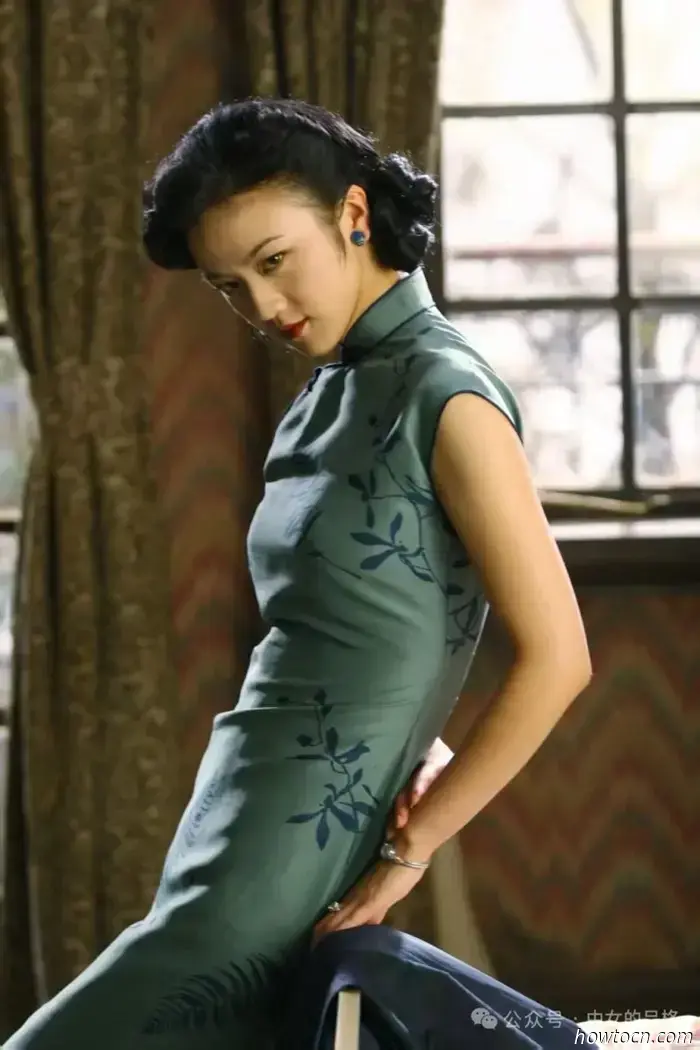
The Hai-style qipao (海派旗袍 hǎi pài qípáo) flourished in the cosmopolitan atmosphere of Shanghai during the early twentieth century, peaking in the 1930s and 1940s when Shanghai emerged as China's leading fashion hub. In this dynamic city, where Eastern and Western cultures mingled, traditional styles evolved to embrace modernity. The traditional straight and concealing banner robe transformed into a new silhouette that is slender, fitted, and graceful, allowing for a nuanced display of the female form. The integration of Western tailoring techniques with Chinese aesthetics gave birth to the Hai-style qipao, a cultural icon of Shanghai's modernity, blending classic Chinese elements with a cosmopolitan flair.
The blue qipao worn by Tang Wei's character, Wang Jiazhi, in Lust, Caution is a prime example of this evolution. Its silk fabric exhibits a soft sheen, both gentle and commanding. The high mandarin collar maintains traditional dignity, while the fitted waistline and meticulously shaped curves subtly accentuate the body. The restrained floral design, glowing against the cool blue background, conveys both delicacy and charm—a balance of innocence and danger that suits her character.
**Su-Style Qipao**
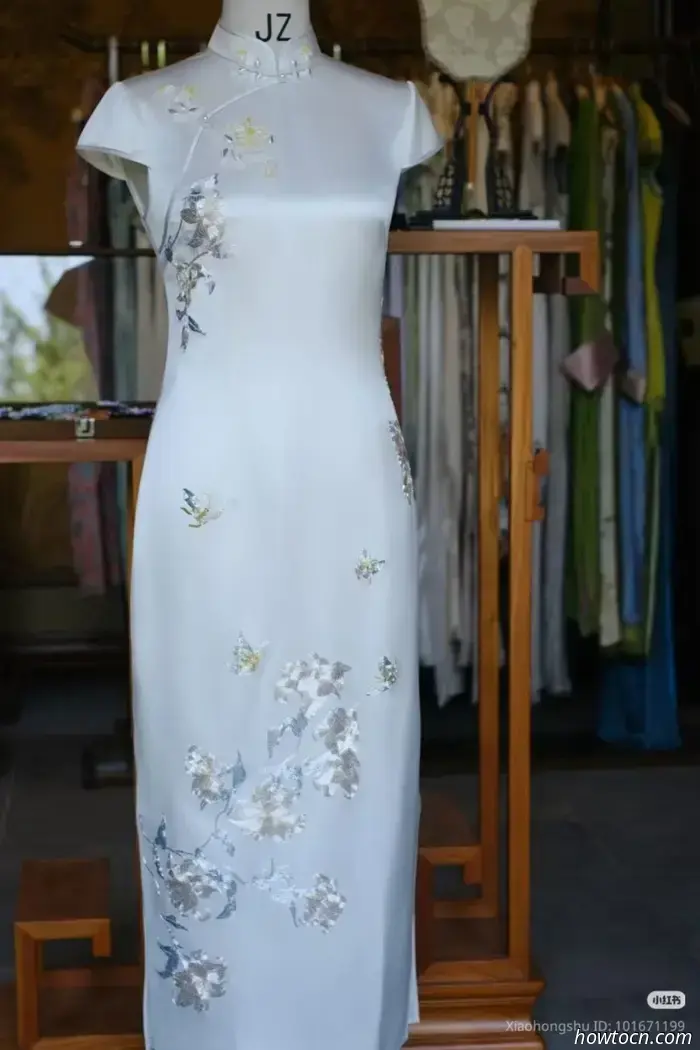
The Su-style qipao (苏派旗袍 sū pài qípáo) originates from the water towns of Jiangnan, particularly Suzhou, where silk has long been cherished, and embroidery is treated as an art form. Unlike the bold modern styles of Shanghai or the dignified grandeur of Beijing designs, the Su qipao focuses on exquisite detail.
Satin and crepe silk serve as the base for intricate embroidery; motifs such as peonies, orchids, plum blossoms, or phoenixes are elegantly stitched across the collar, bodice, or sleeves. Techniques like scatter stitching, seed embroidery, and layered shading provide these designs with depth and fluidity, while subtle color palettes maintain a graceful harmony rather than extravagance. Some ceremonial Su-style qipaos are further embellished with beads and crystals, adding an element of opulence without compromising the garment's essential elegance.
**Yue-Style Qipao**
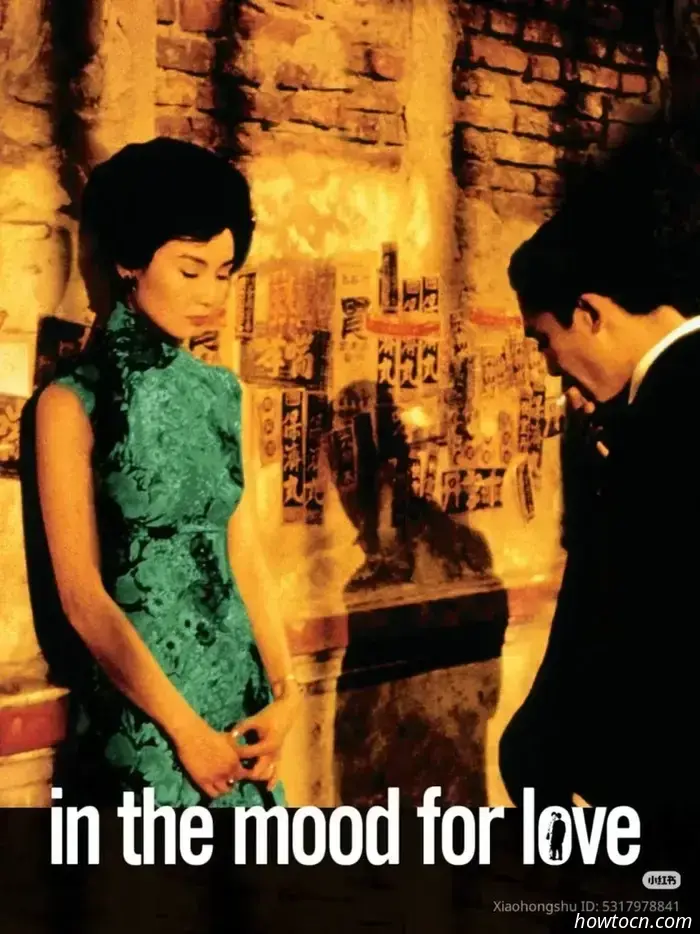
The Yue-style qipao (粤派旗袍 yuè pài qípáo), also known as the Canton or Hong Kong style, emerged in the southern coastal provinces and flourished in the vibrant cosmopolitan atmosphere of mid-twentieth-century Hong Kong. Often made from cotton or slightly structured fabrics, the Yue-style qipao adopts Western pattern-making methods while retaining the core essence of Chinese elegance. Its characteristic silhouette, featuring a pointed bust, narrow waist, and a hem tapering toward the knees, exudes a sculpted grace that is both modest and sensual.
Maggie Cheung's numerous qipaos (20 in total!) in In the Mood for Love are perhaps the most renowned examples of this style. The dresses, with their high collars and clean, architectural lines, fit the body with understated precision. Striking prints, ranging from florals to geometric designs, bring life to the otherwise simple form, while the close fit and subtle slits suggest intimacy without revealing too much.
READ: September Art Roundup: 40 Exhibitions Ending This Month in 798
Images: Wikimedia Commons User: N509FZ, Xiaohongshu, Douban
Throughout the years, various styles of qipao have developed.