
07/19/2025 - 07/19/2025
View Asia 2025 on zzlangerhans's travel map.
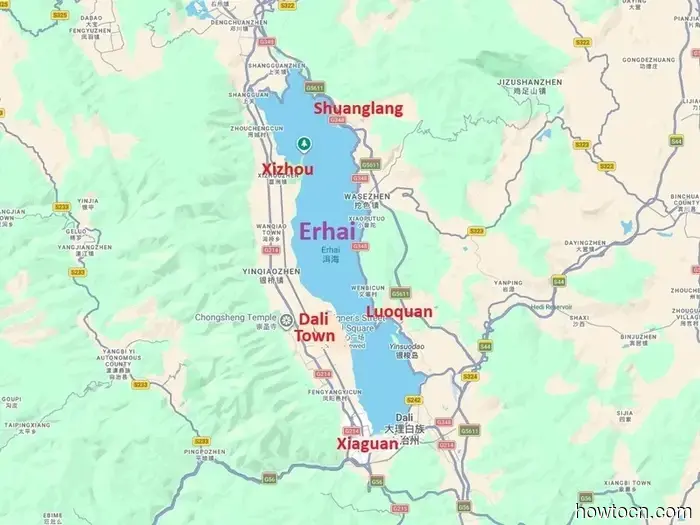
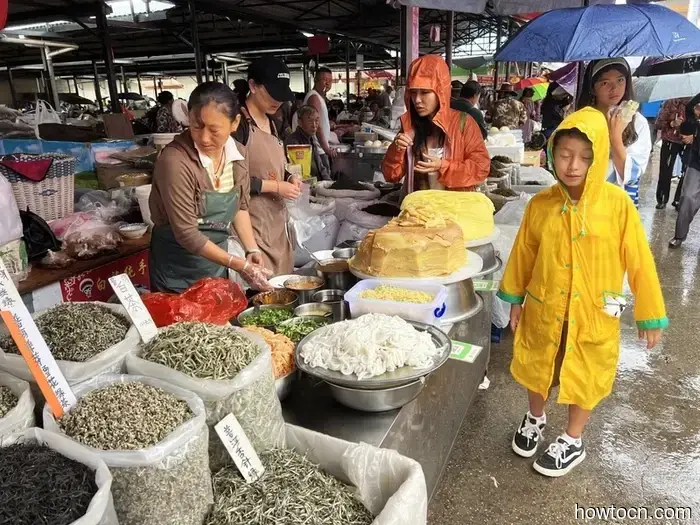
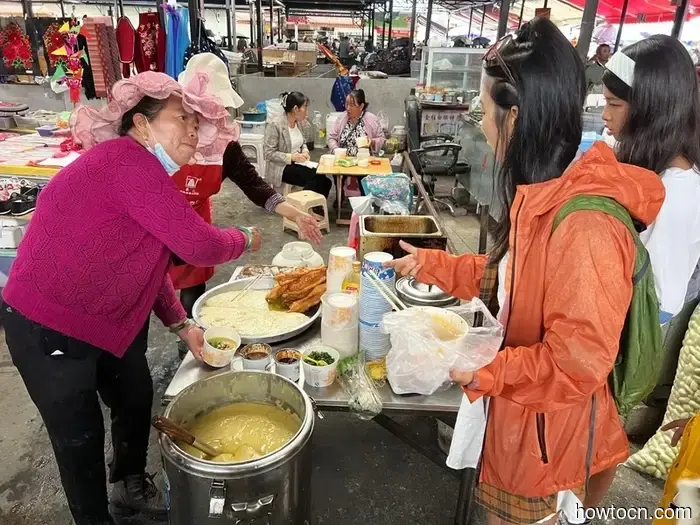
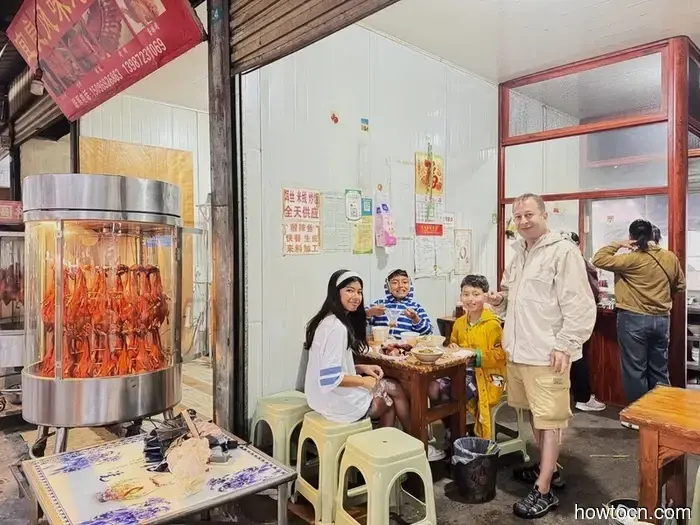
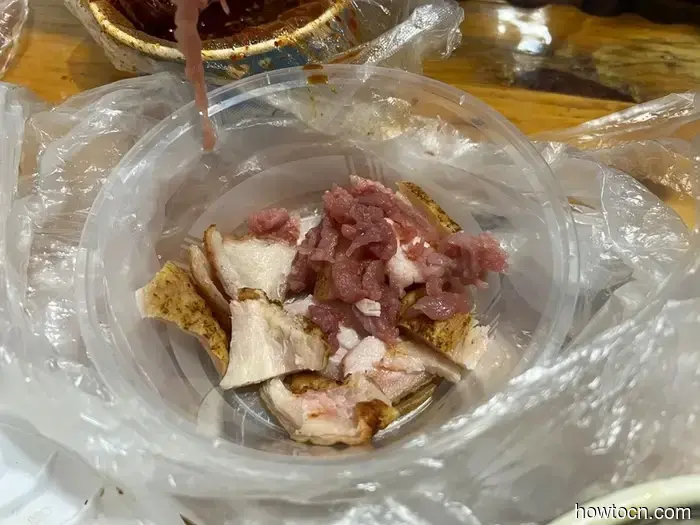
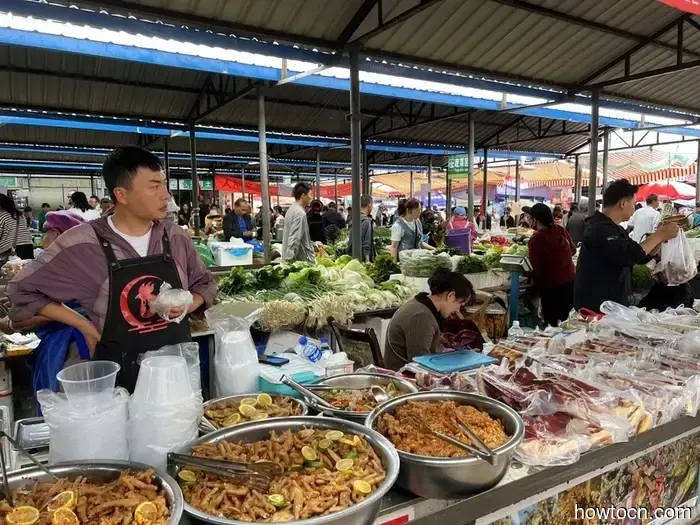
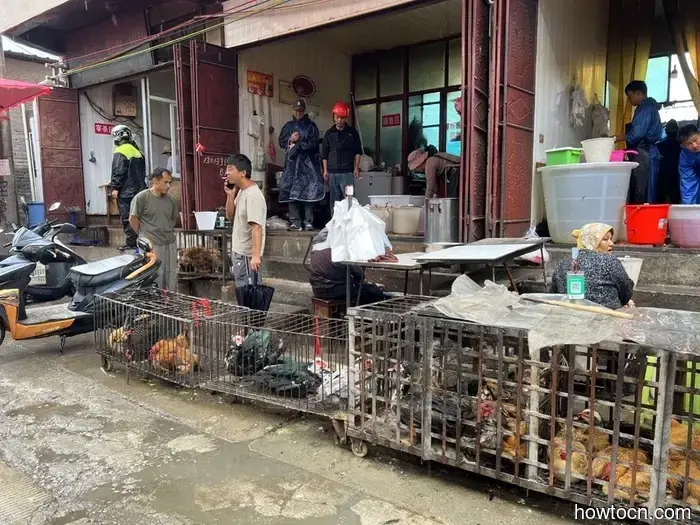
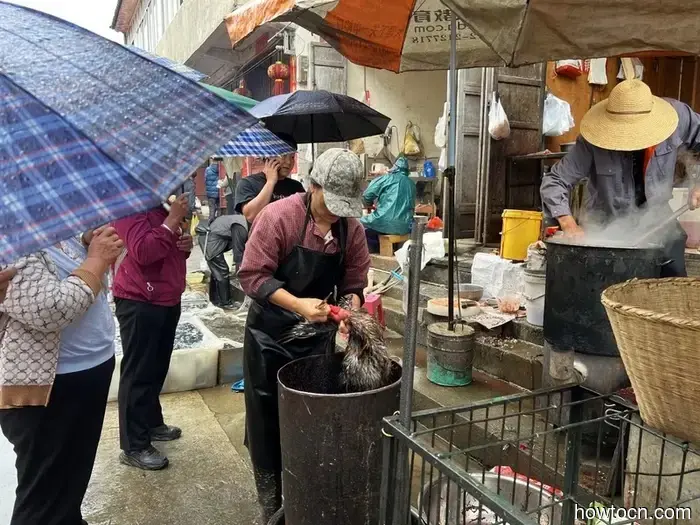
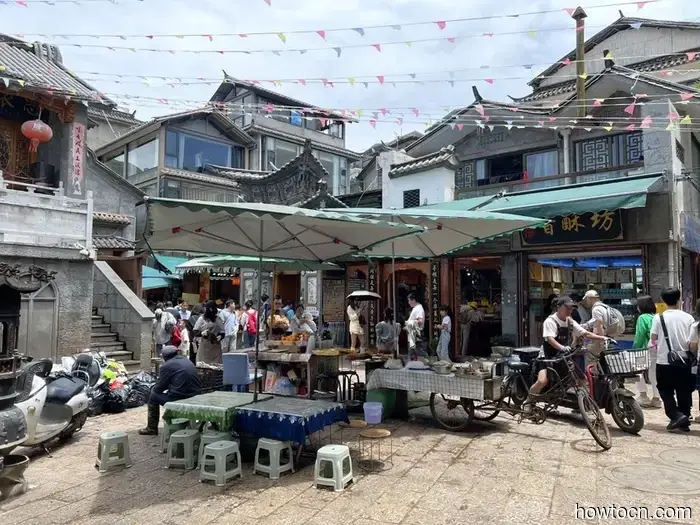
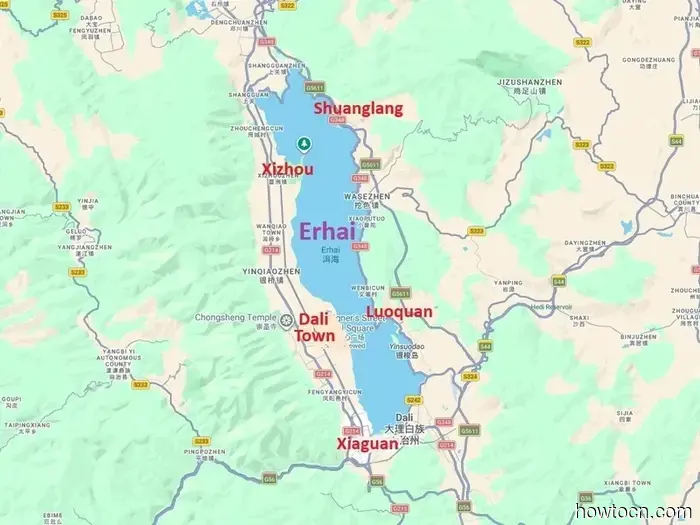
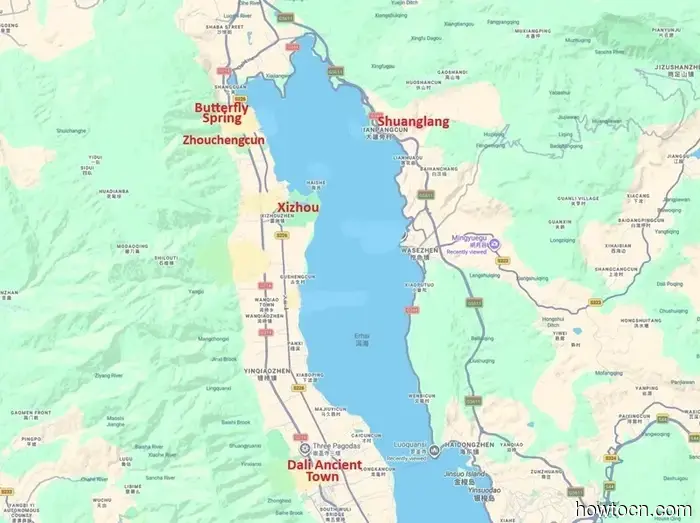
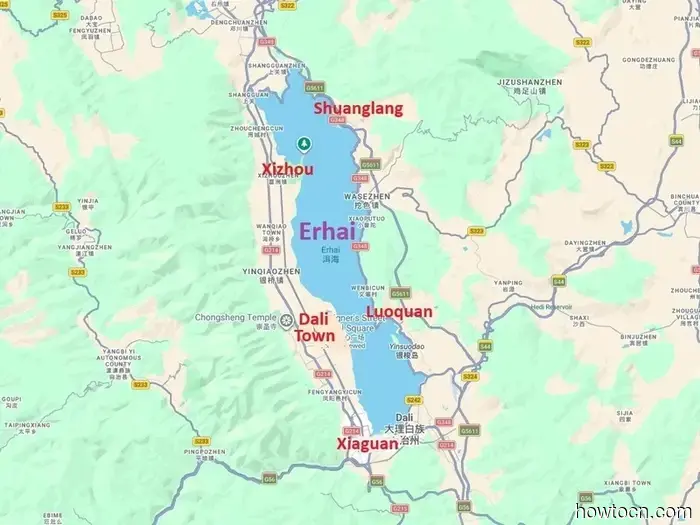
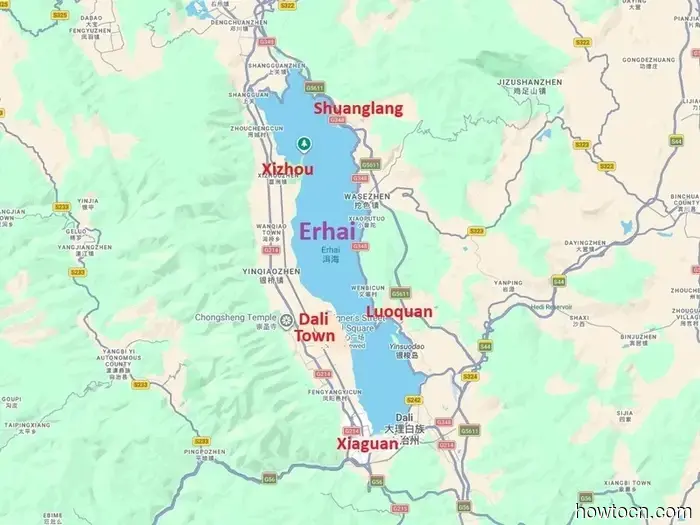
Similar to Lijiang, which is near numerous reconstructed villages that maintain the culture of the Naxi minority, Erhai Lake is surrounded by various towns where tourists can experience the traditions of the Bai minority. I chose a few specific locations as I wanted to avoid repeating our earlier mistake in Lijiang of spending excessive time in towns that were quite alike. Mei Ling had arranged for our taxi driver from the previous day to be our private driver for a trip to the northern part of the lake. On Saturday morning, we started early and drove to Xizhou to reach the market before nine, in ample time for breakfast. By the time we got there, it was raining heavily, but we weren't going to let that deter us. Luckily, most of the market was sheltered, although we had to watch out for places where water leaked through the roof. We visited a few stalls where vendors were preparing noodle soups with bright yellow mung bean paste, vegetables, and spices. We took a seat at a small grilled duck restaurant in the butchers' area, meaning we had to order half a duck with our meal. Mei Ling explored the butcher stalls further and returned with a bowl of raw pork meat and skin. I had never considered raw pork as edible, even in China. I tasted a piece, and it was surprisingly okay, but I couldn't shake my reservations enough to help her finish the bowl. We continued to explore the sizable market, which grew busier once the rain let up. The most fascinating section for us was a live poultry market, where some workers were actively slaughtering and defeathering chickens. A worker would hold a chicken down, bend its head back to cut its throat, and then drop it into a bucket to bleed out. Another person would toss the still-moving bird into a pot of boiling water and stir it for a few minutes before transferring it to a machine that removed its feathers using an unseen mechanism. It was a gruesome sight, and the kids were a bit unsettled by it, but I think it's crucial for them to grasp what happens before meat reaches their table.
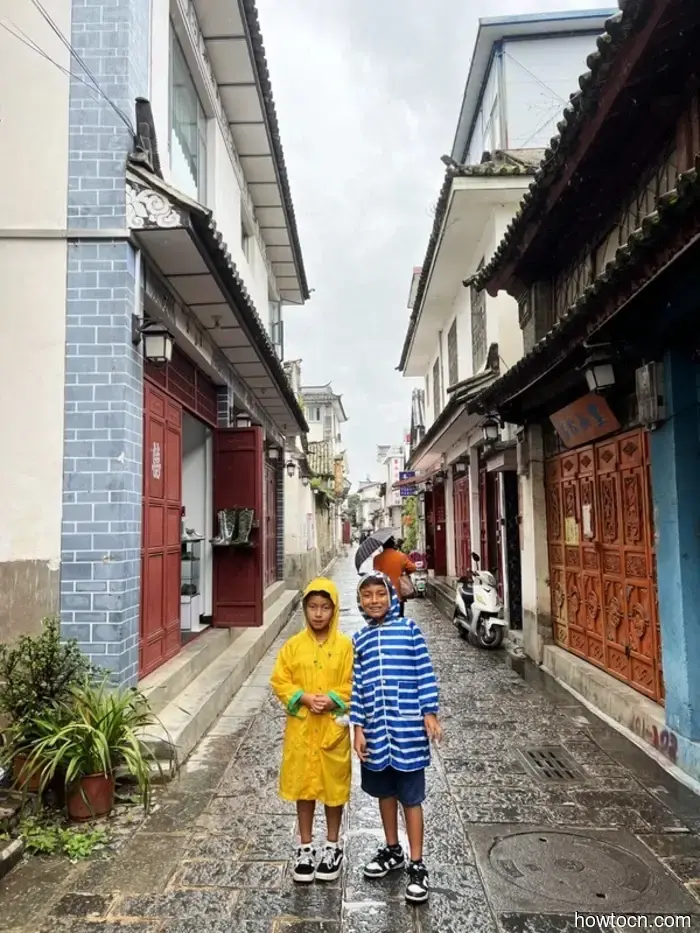
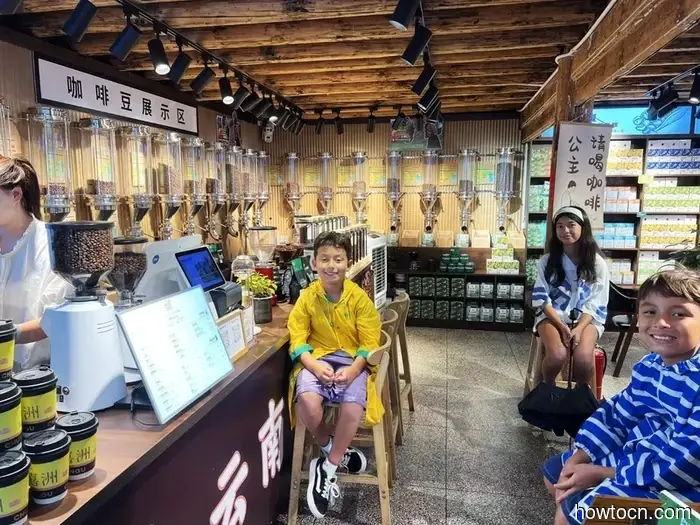
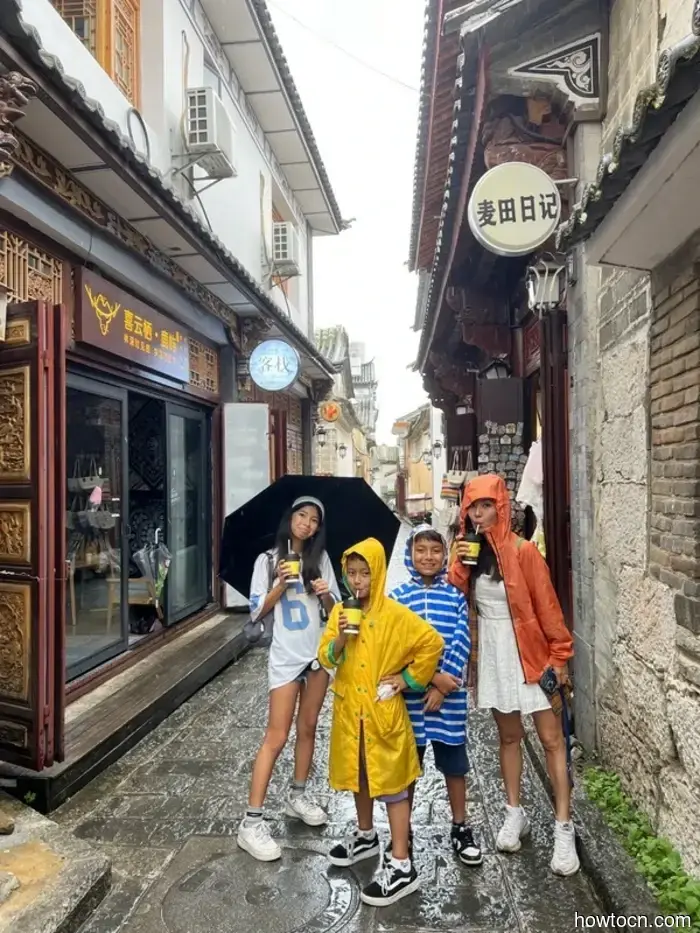
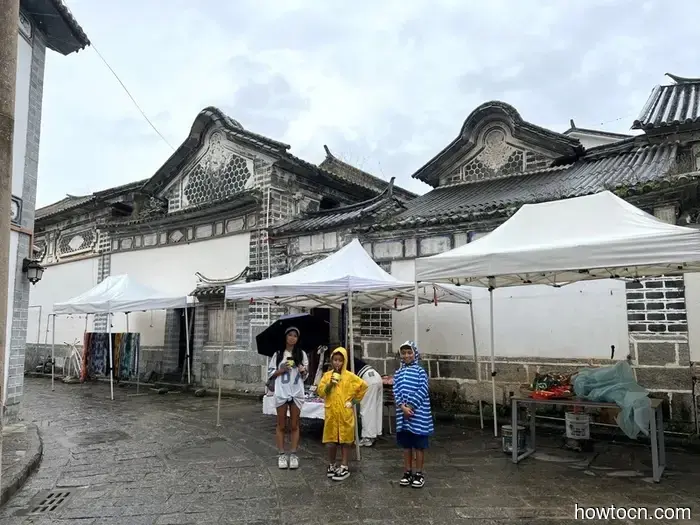
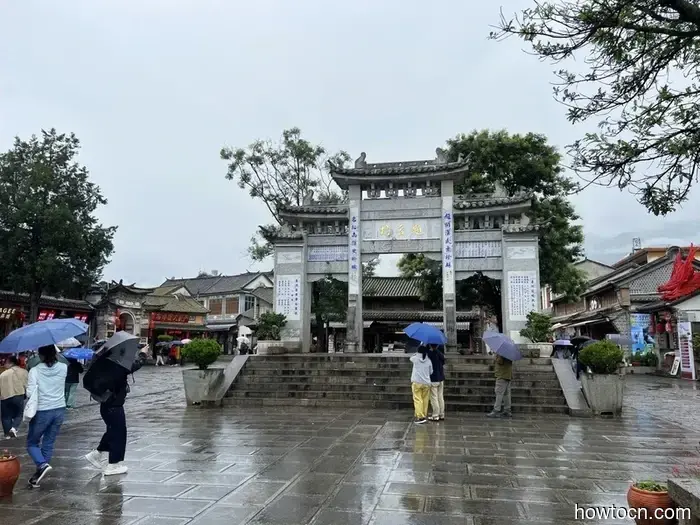
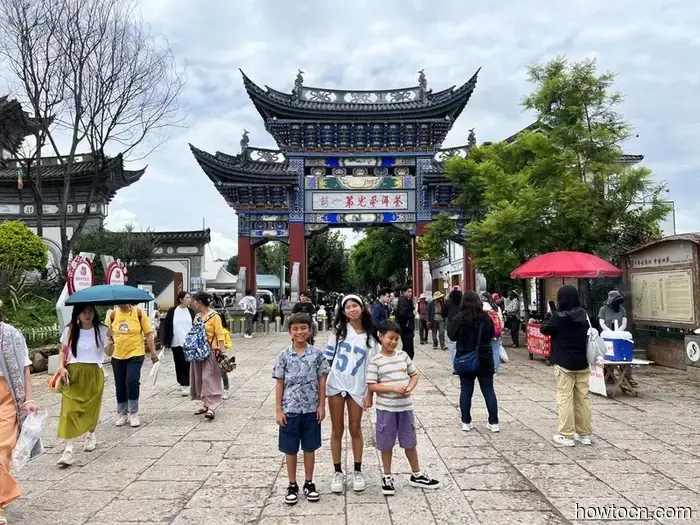
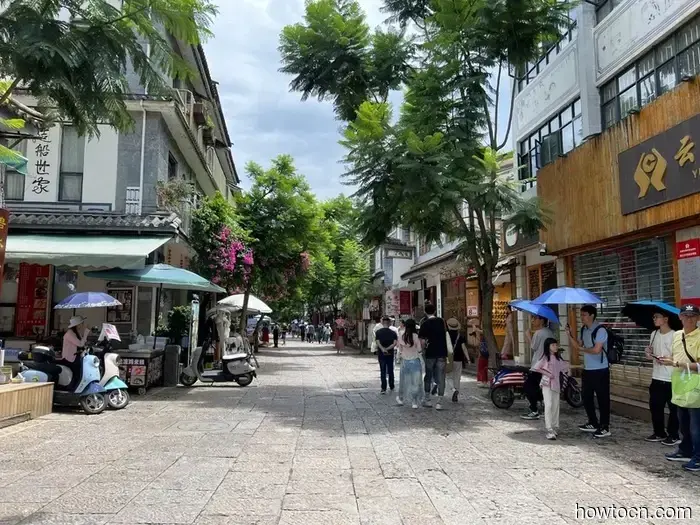
Xizhou originated around the tenth century when Erhai Lake was part of the Dali Kingdom, ruled by the Bai indigenous elite. The town prospered as it was located on trade routes connecting Tibet and central China, and this success persisted even after the Mongol Empire conquered the Dali Kingdom in the thirteenth century, integrating the area into China. Bai merchants continued to maintain de facto control over Xizhou and the lakeshore, despite many Han settlers moving into the area from the east. Xizhou experienced a decline following the Communist Revolution, but like many places in Yunnan, it has seen significant restoration since the 1990s. The main street of the old town is Sìfang Jie, which features a mix of crumbling and restored buildings, many of which host clothing boutiques and souvenir shops. We stopped by a modern coffee shop for warm drinks to warm us against the sporadic drizzle. Eventually, Sifang Jie opened into a large plaza featuring a stone gate called Tieming Fang. On one side of the plaza, there was an elaborate entrance to a preserved Bai mansion known as the Yan Family Courtyard. The entry fee was quite steep, and seeing large tour groups entering, we decided to skip it.
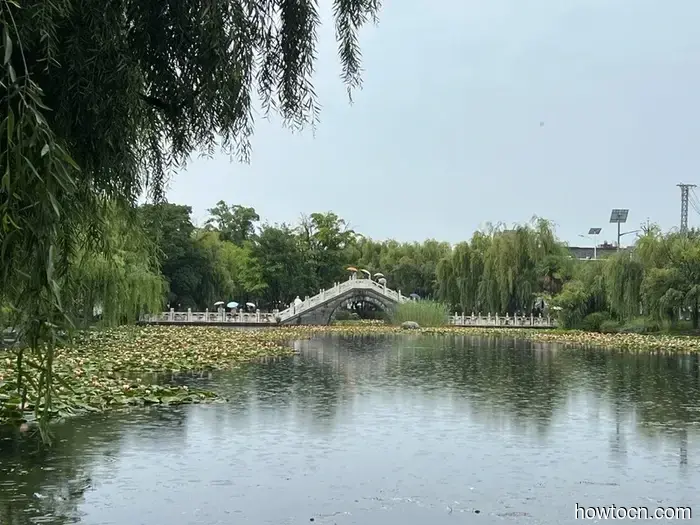
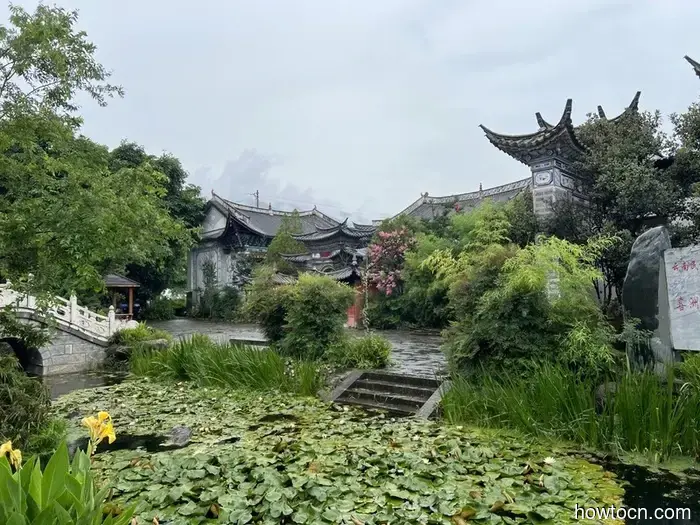
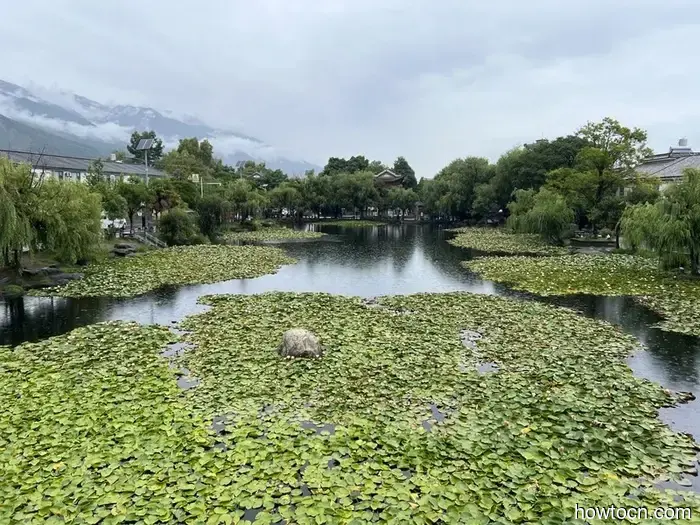
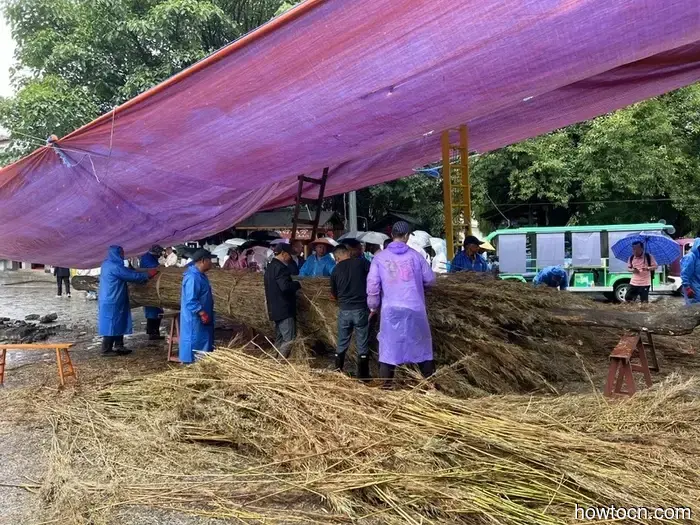
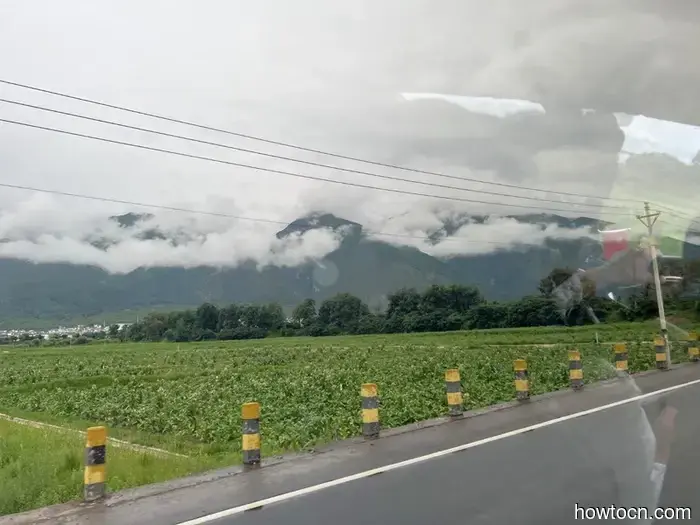
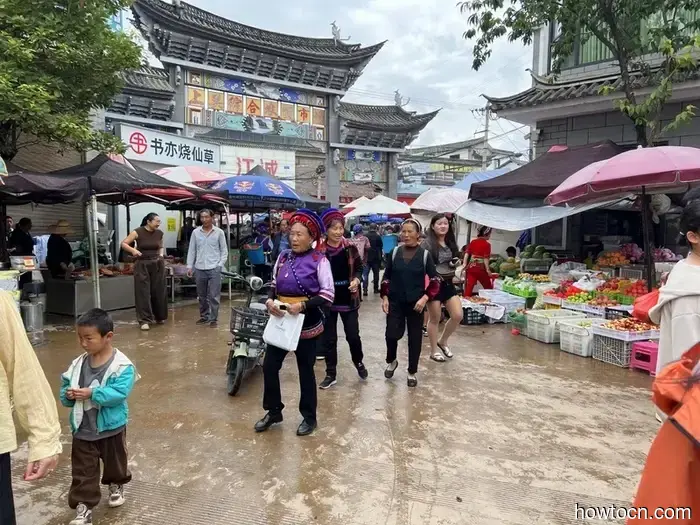
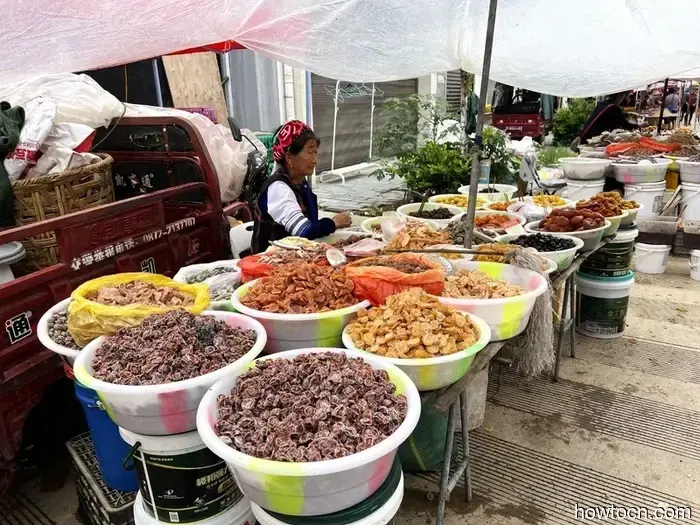
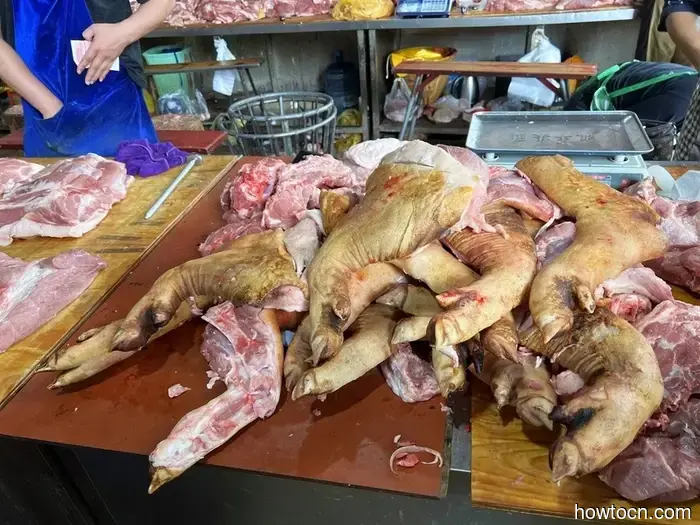
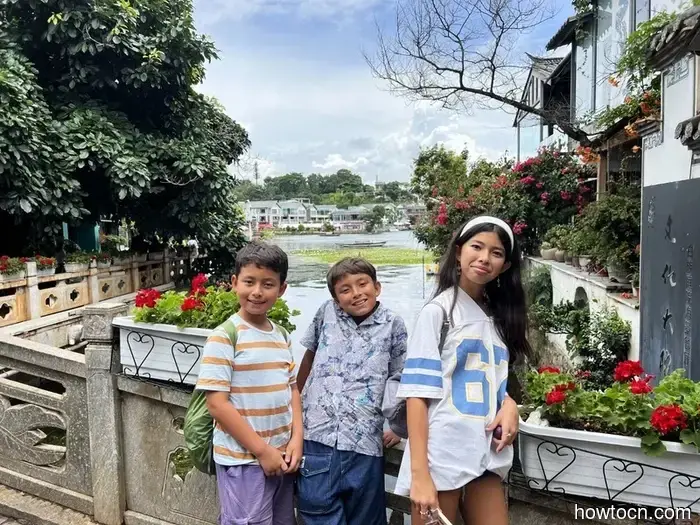
Mei Ling set up a meeting point with our driver on the main road surrounding the old town. When we arrived at the designated spot, he hadn’t arrived yet, which was fortunate because there was a lovely pond adorned with lilies and a curved stone bridge at its center. Raindrops formed a constantly changing pattern of concentric circles on the calm water surface. Bai-style reconstructed buildings lined the pond next to the old town. In a courtyard adjacent to the pond, a group of workers was binding a large bundle of bamboo around a long, partially charred log. I presumed this was preparation for the torch festival, which was a positive sign as I hadn’t been able to determine with full confidence that we were in Dali on the appropriate weekend for the festival. Our driver took us around the northern end of Erhai Lake to reach the village of Shuanglang. Along the way, we passed fields of unfamiliar crops and endless chains of hills veiled by low clouds. Before we reached the touristy old town, our driver stopped at a local market where elderly women dressed in traditional Bai attire were visible. It was uncertain whether that was their everyday clothing or if they were part of the tourism industry. Among the specialties displayed were large baskets of dried fruits and stacks of severed pig haunches.
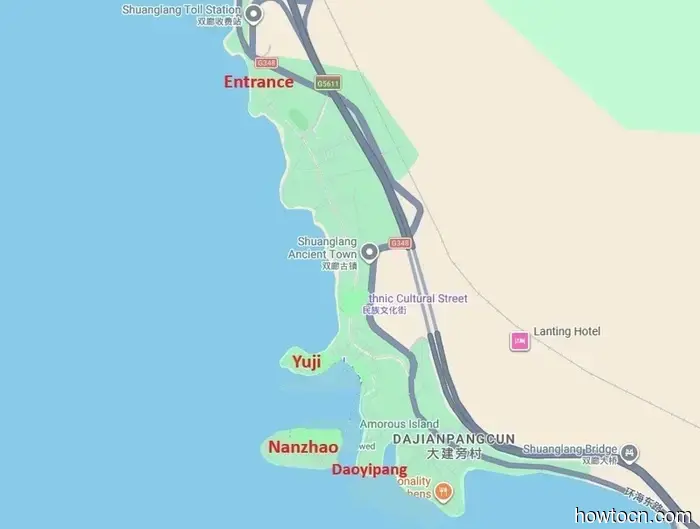
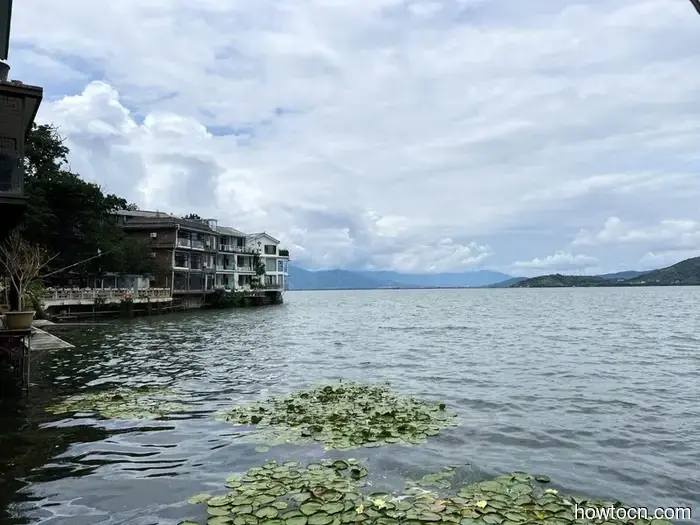
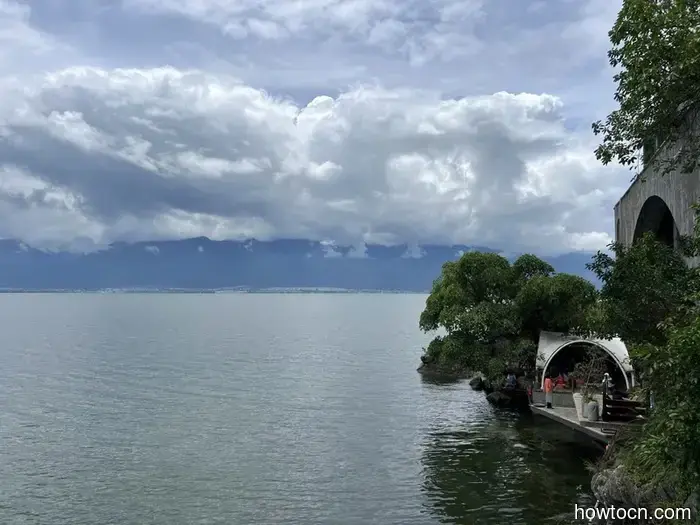
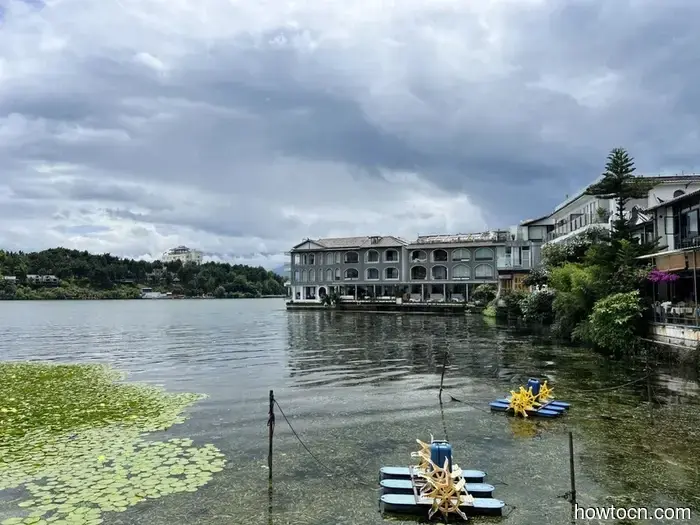
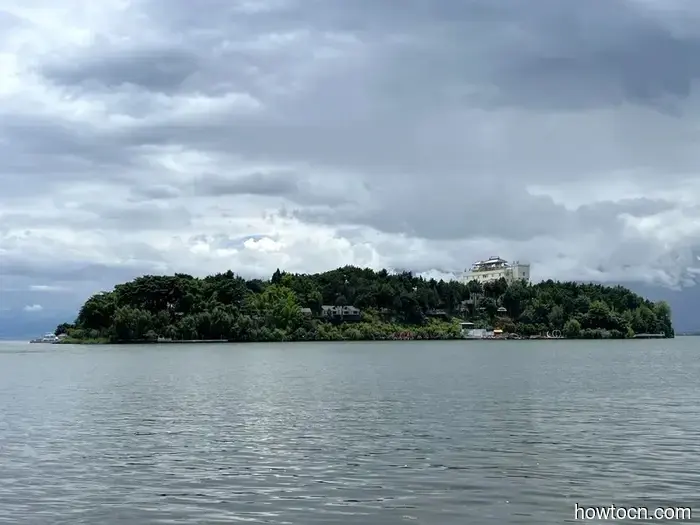
Shuanglang is thought to have gotten its name, which translates to "two galleries," from the two short peninsulas flanking the lakeshore village


07/19/2025 - 07/19/2025 View Asia 2025 on zzlangerhans's travel map.
07/19/2025 - 07/19/2025 View Asia 2025 on zzlangerhans's travel map.
07/19/2025 - 07/19/2025 View Asia 2025 on zzlangerhans's travel map.
07/19/2025 - 07/19/2025 View Asia 2025 on zzlangerhans's travel map.
07/19/2025 - 07/19/2025 View Asia 2025 on zzlangerhans's travel map.
07/19/2025 - 07/19/2025 View Asia 2025 on zzlangerhans's travel map.
07/19/2025 - 07/19/2025 View Asia 2025 on zzlangerhans's travel map.